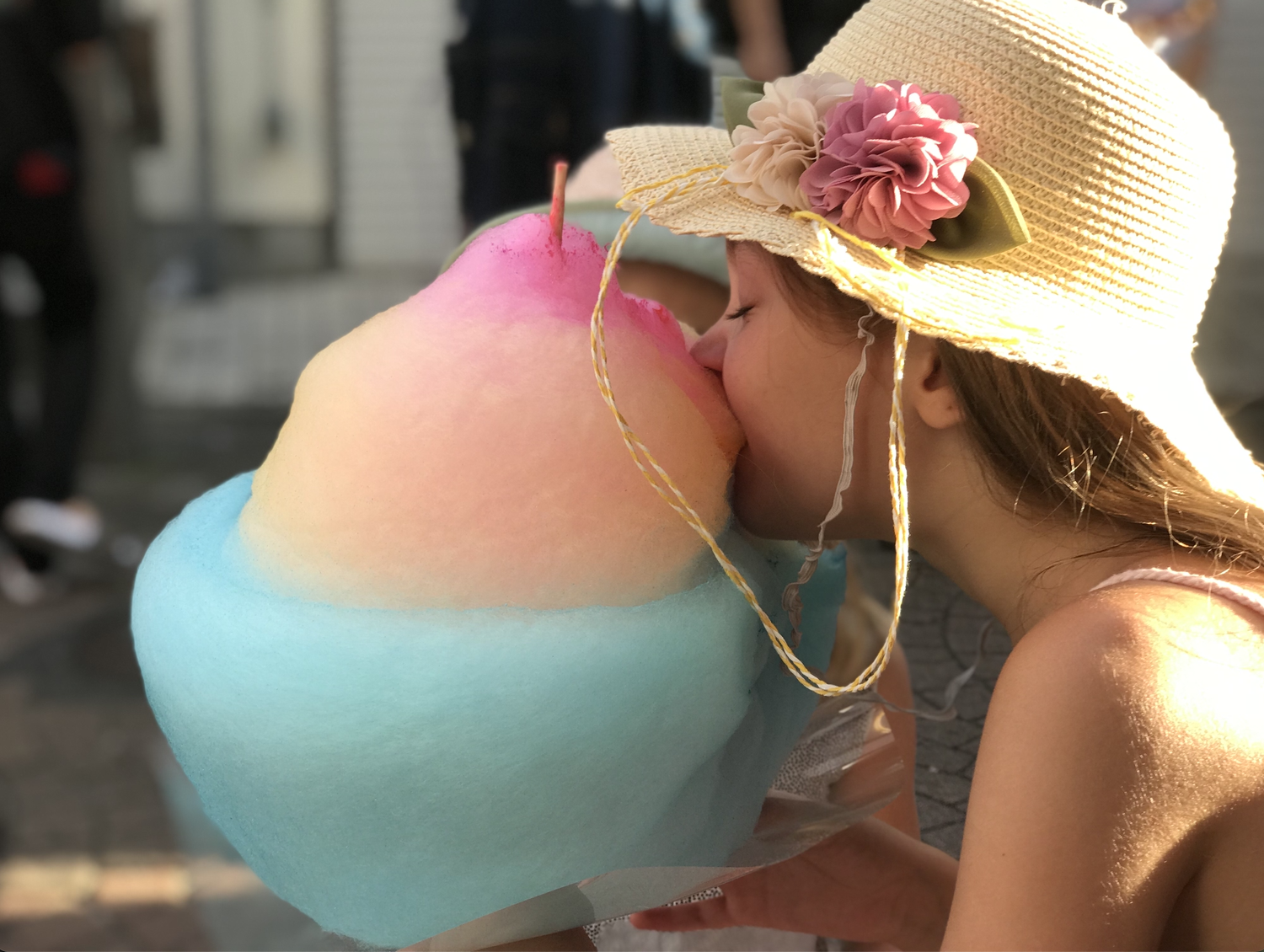
There is a part of you that has never truly disappeared.
It remains present beneath the layers of responsibility, adaptation, and expectations that life gradually places upon us. This part of you is playful, curious, open, and deeply connected to the experience of being alive. Yet, as we grow into adulthood, we begin to distance ourselves from it. We learn to become more serious, more controlled, more “appropriate,” and without fully realizing it, we start to lose touch with our spontaneity, our joy, and our natural way of expressing ourselves.
What we often describe as confusion, stagnation, or even a sense of disconnection is, in many cases, not something to fix but something to understand. It is often a signal that we have moved away from ourselves. In this sense, reconnecting with the inner child is not a luxury or an abstract idea—it is a return to something essential.
The inner child is not simply a psychological concept to be analyzed. It is something we experience through the body, through emotions, and through instinct. It holds our earliest memories of joy and wonder, but also the moments of hurt, fear, or misunderstanding that were never fully processed. These experiences do not disappear with time; they remain within us, subtly shaping the way we relate to others, the way we perceive ourselves, and the way we respond to life when things feel uncertain.
In adulthood, we are often conditioned to prioritize productivity, logic, and control. We are taught to think our way through challenges and to manage our emotions in a way that feels acceptable. Yet, there is a different pathway available to us—one that does not require more effort, but rather a softening. Playfulness becomes a powerful entry point into this space. When we allow ourselves to engage in play, whether through movement, creativity, or simple moments of expression, something shifts within us. The body relaxes, the breath deepens, and the nervous system begins to regulate itself naturally. Without forcing anything, we return to the present moment.
For a long time, I found myself navigating life from a subtle place of fear. It was not always visible on the surface, but it was present in the background—fear of not being enough, fear of being seen, fear of making the wrong decisions. From the outside, everything continued as expected, but internally there was a growing sense of disconnection. It was only when I began to reintroduce simple, playful experiences into my life that something started to change. There was no dramatic breakthrough, but rather a quiet and consistent shift. Warmth began to return, a sense of softness emerged, and I found myself more present in my own life. It was not about becoming someone new, but about remembering who I had always been.
Each time we allow ourselves to play, we loosen the grip of control. We begin to move away from the need to perform and instead reconnect with something more authentic. Play is not an escape from reality; it is a way of experiencing reality without the weight of conditioning. It allows us to feel again, to express again, and to trust again.
This return does not require a complete transformation of your life. It often begins in very small, almost unnoticed moments. It can be found in moving your body without structure, in listening to music and allowing yourself to feel it fully, in stepping into nature and simply observing without distraction, or in laughing without needing a reason. These moments may seem simple, but they are deeply significant. They create openings through which we reconnect with ourselves.
At times, this process can feel uncomfortable. As we soften, we may encounter resistance or unexpected emotions. This is a natural part of the experience, as what has been held beneath the surface begins to emerge. It does not mean that something is wrong; it means that something is being felt and integrated. There is a quiet intelligence in this process, one that does not require control but rather presence.
As this connection deepens, the way we navigate life begins to change. We rely less on overthinking and more on a felt sense of alignment. The body becomes a guide, and intuition becomes more accessible. Decisions are no longer driven solely by external expectations, but by an inner knowing that feels steady and grounded.
In this space, we begin to understand that freedom is not something we need to search for outside of ourselves. It is something that emerges when we allow ourselves to be present, when we release the need to control every outcome, and when we give ourselves permission to simply exist as we are, even if only for a moment. These moments, although small, have the capacity to transform the way we experience our lives.
This is not a one-time realization but an ongoing relationship with yourself. Some days will feel more open, while others may feel more closed, and both are part of the process. What matters is not achieving a constant state of ease, but developing the willingness to return to yourself, again and again, with patience and compassion.
If you feel that this connection is distant, or if you are moving through a period of overwhelm, disconnection, or emotional weight, it is important to remember that you do not have to navigate it alone. Reconnecting with yourself is a process that can be supported and guided, and it is through this work that deeper clarity, peace, and alignment begin to emerge.
Returning to your inner child is not about becoming someone else. It is about letting go of what is not you, so that what has always been there can finally be felt again.